


All Things You Need To Know About Deep Foundations Construction

By Kerry Cooper
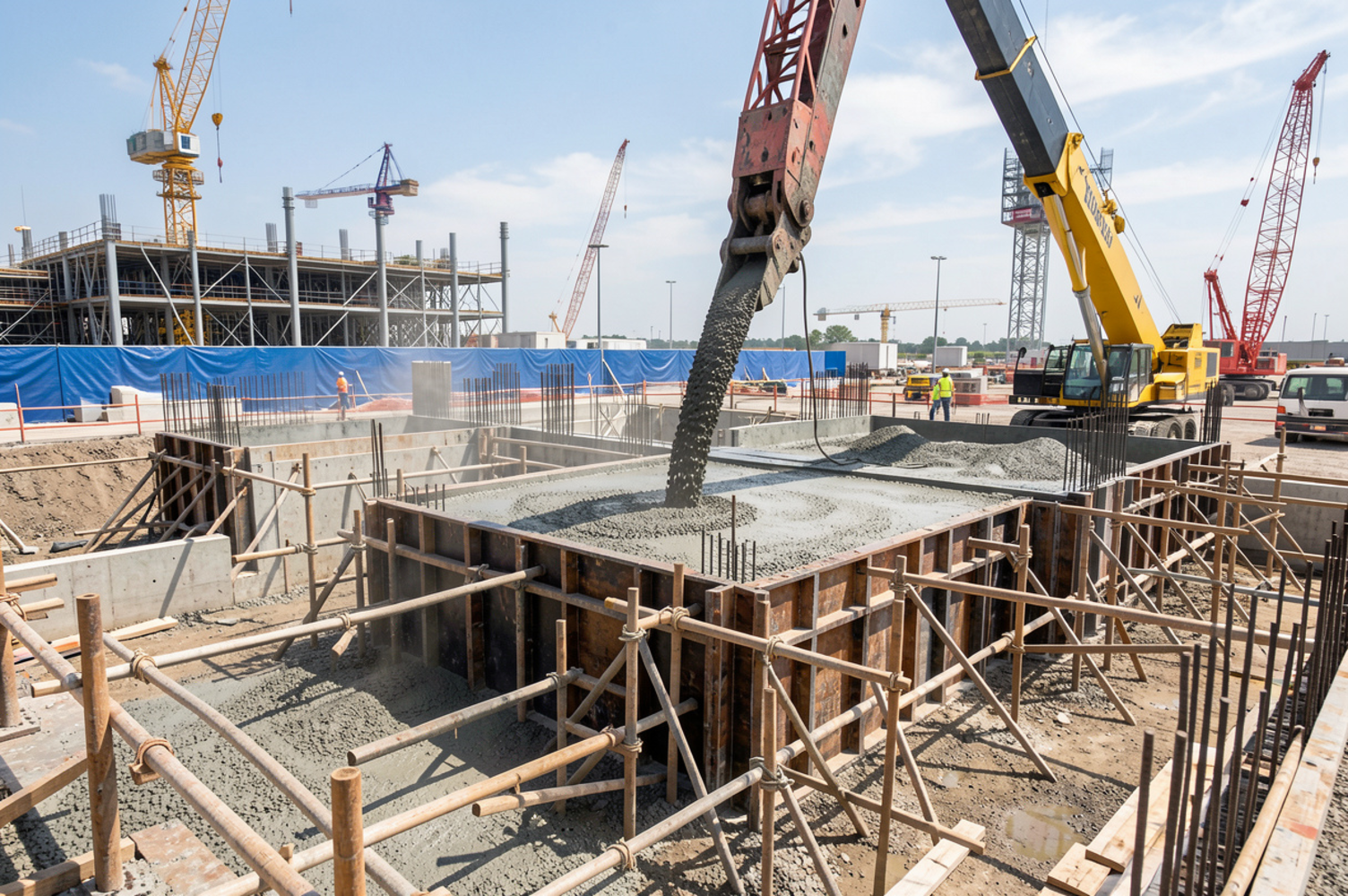
When you look at a finished building, all you notice is what’s above the ground, the walls, the roof, the clean lines, the final design.
But what you never notice is what truly holds that structure together, and that’s the foundation buried deep below the surface.
This is especially true for deep foundation systems that keep your building standing strong even if the soil is soft, sandy, water-logged, or inconsistent.
You see, shallow foundations aren’t always enough to safely support the weight of a building.
And this is where you need deep foundations. They transfer the load of your structure to stronger, more stable soil or rock layers far below the ground.
This helps prevent settlement, cracking, and long-term structural problems.
In this blog, I will walk you through all things deep foundations construction. You’ll know how they work, the most common foundation types, and when you might need one for your project.
So, let’s get started.
Key takeaways
- Deep foundations transfer building loads to strong soil or rock below.
- They prevent settlement, cracking, and structural problems.
- Common deep foundation types include piles, drilled shafts, piers, helical piles, micropiles, CFA piles, and caissons.
- These foundations are used when surface soil is weak, groundwater is high, or loads are heavy.
- Deep foundations provide long-term stability and performance.
- Geotechnical soil testing is essential before choosing a deep foundation.
What is a deep foundations construction?
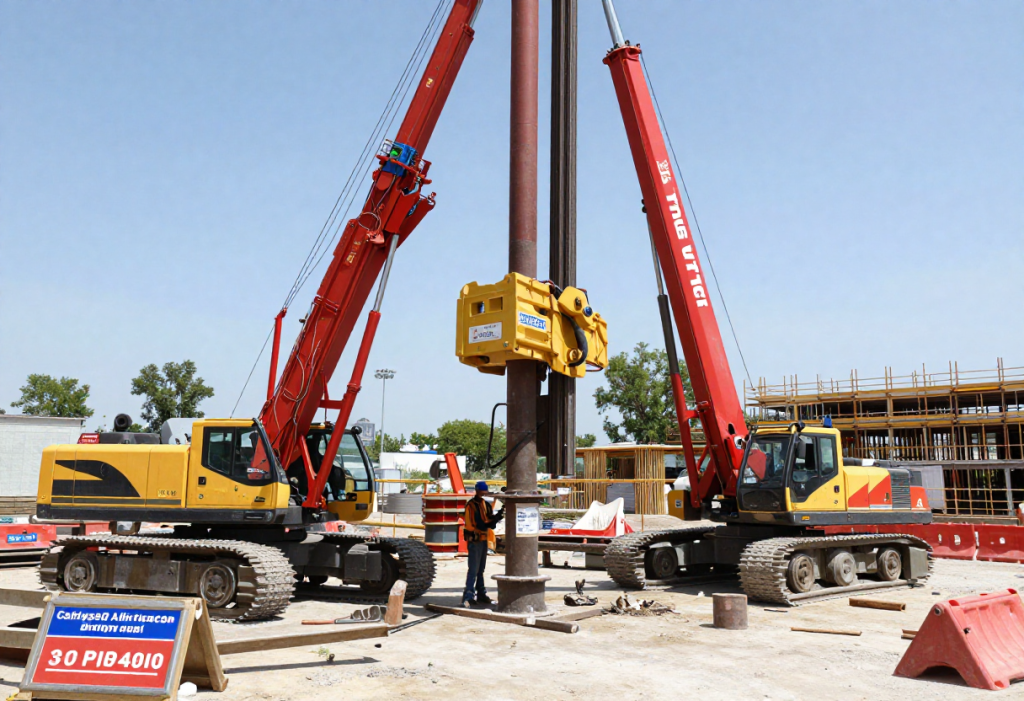
A deep foundation is exactly what it sounds like, it’s a foundation that goes deep into the ground to support a building.
Here, instead of relying on the soil right below the surface, the foundation transfers the weight of the structure down to stronger, more stable soil or rock.
This is important because not all soil near the surface is reliable. In fact, in many areas, the top layers of soil can be soft, loose, wet, or inconsistent.
And when a building sits on soil like this, it can settle unevenly, crack, or shift over time.
So, rather than taking that risk, engineers use deep foundation systems to bypass the weak soil and anchor the structure where the ground is strong.
You will commonly find deep foundations in projects like:
- Multi-storey buildings
- Industrial and warehouse facilities
- Bridges and elevated structures
- Sites with poor or changing soil conditions
- Coastal areas and locations with high groundwater
Don’t Let Site Conditions Delay Your Project
From geotechnical reports to environmental assessments, and more, our ACI-certified experts deliver the data and insights you need to stay on schedule.

How do deep foundation systems work?
Deep foundations work by moving the weight of a building away from weak surface soil and into stronger ground below.
They do this in two main ways, end bearing and skin friction. Also, most projects use a mix of both.
Here’s how it works:
1. End bearing
Here, the foundation reaches a strong soil layer or solid rock, and the building’s weight is transferred straight down to that firm base.
2. Skin friction
Here, the sides of the foundation grip the surrounding soil as it goes deeper. This friction helps hold the structure up and spread the load along the length of the foundation.
Together, these methods allow deep foundations to safely support heavy buildings, even when surface soils aren’t reliable.
In short, here’s how deep foundations work:
| Method | How It Works |
| End Bearing | Foundation rests on strong soil/rock at the bottom; weight is transferred directly down. |
| Skin Friction | Load is transferred along the sides of the foundation via friction with surrounding soil. |
| Combination | Most projects use both end bearing and skin friction for stability. |
Why are deep foundations needed in the Carolinas?
Soil conditions are quite unpredictable across North and South Carolina, which makes deep foundations necessary in this region.
Here are some of the most common reasons why a geotechnical consultant will almost always suggest a deep foundation:
- Loose coastal sands that don’t provide enough strength near the surface
- Soft or compressible soils that can settle under building loads
- High groundwater levels that weaken soil and complicate construction
- Layered soil conditions, where soil strength changes quickly with depth
- Seasonal moisture changes that can cause soil to expand, shrink, or lose strength
You see, if you use a shallow foundation in these conditions, your building can experience settlement, shifting, or cracking. In fact, even small amounts of soil movement can cause serious structural issues.
In short, here’s why deep foundation systems are common in the Carolinas:
| Soil Challenge | Impact on Shallow Foundations | Deep Foundation Solution |
| Loose coastal sands | Weak support near surface | Anchors structure in stronger layers below |
| Soft/compressible soils | Risk of settlement | Transfers load to firm soil or rock |
| High groundwater | Soil weakening, construction issues | Avoids water-affected layers |
| Layered soils | Uneven settlement | Bypasses weak layers |
| Seasonal moisture changes | Soil expands/shrinks | Stable support in deep soil layers |
What are the different types of deep foundation systems?
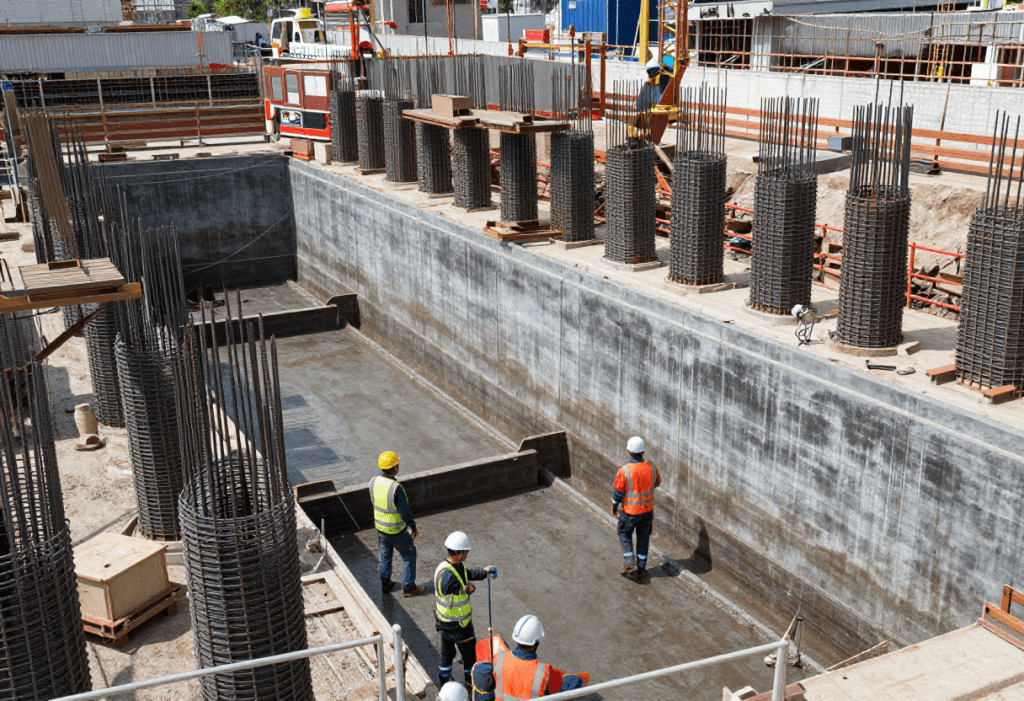
When it comes to deep foundations construction, there isn’t a standalone foundation type that engineers rely on.
In fact, there are seven types of deep foundation types that buildings in both North and South Carolina use. Also, sometimes engineers use a mix of foundation systems based on soil conditions and strength requirements.
Overall, here are the different types of deep foundations you’ll see in construction:
1. Pile foundations
A deep pile foundation is one of the most commonly used deep foundation systems. It uses long, slender structural elements installed deep into the ground when the soil near the surface isn’t strong enough to support a building on its own.
Here, instead of relying on shallow soil, piles transfer the weight of the structure down to stronger layers below. This helps prevent settlement and long-term movement.
2. Drilled shafts or caissons
Drilled shafts, also known as caissons or bored piles, are deep foundation elements designed to support very heavy loads.
Compared to typical piles, they are much larger in diameter and are often used when a project requires extra strength or stability.
Drilled shafts are built directly in the ground, which allows engineers to tailor them to specific soil and rock conditions on the site.
3. Pier foundations
Pier foundations are large, vertical concrete elements designed to carry building loads down to deeper and stronger soil layers.
They are used when surface soils can’t safely support a structure and extra strength and stiffness are required below ground.
Pier foundations are similar to drilled shafts in how they function. But they are often selected for projects where loads are especially heavy or soil conditions change over short distances across the site.
Their size and rigidity help provide better control over settlement and structural movement.
4. Helical or screw piles
Helical piles are a unique type of deep foundation made of steel shafts with spiral-shaped plates, similar to a giant screw.
And instead of being driven or poured, these piles are literally screwed into the ground, which makes them fast and efficient to install.
Helical piles’ design make them especially useful in situations where traditional pile installation would be difficult or disruptive.
5. Micropiles
Micropiles are small-diameter, high-capacity piles that are drilled deep into the ground.
Despite their modest size, they can carry surprisingly heavy loads, making them a versatile option for challenging construction situations.
One of the biggest advantages of micropiles is that they can be installed in tight spaces where larger foundation systems would be impractical.
They’re also a go-to solution for strengthening or underpinning existing buildings, helping prevent settlement or structural issues without requiring major demolition.
6. Continuous flight auger or CFA piles
Continuous flight auger or CFA piles are a modern type of deep foundation system. And they are formed by drilling a hole with a continuous auger and simultaneously pumping concrete into the hole as the auger is slowly withdrawn.
This creates a strong, solid foundation element without the need for traditional casing or drilling supports.
This method is particularly effective in soft soils or areas with high groundwater, where traditional pile methods might be more challenging or disruptive.
7. Caisson foundations
Caissons are large, watertight foundation structures that are mostly used in heavy civil engineering projects.
They are designed to carry very high loads and are ideal for sites where the foundation needs to be constructed underwater or in soft soil.
These foundations work by being carefully sunk into the ground to the required depth, then filled with concrete to create a solid support for the structure above.
This method allows construction in locations where traditional pile foundations may not be feasible.
In short, here are the different types of deep foundation systems:
| Deep Foundation Type | What It Is | When It’s Commonly Used |
| Pile Foundations | Long, slender columns driven or installed deep into the ground to carry building loads | When surface soil is weak and deeper soil can provide better support |
| Drilled Shafts (Caissons / Bored Piles) | Large-diameter concrete foundations built by drilling and filling with concrete | For very heavy loads or projects needing extra strength and stability |
| Pier Foundations | Thick vertical concrete columns that transfer loads to deeper soil layers | When loads are heavy and soil conditions vary across the site |
| Helical (Screw) Piles | Steel piles with spiral plates that are screwed into the ground | When fast installation is needed or vibration and noise must be minimized |
| Micropiles | Small-diameter drilled piles with high load capacity | Tight spaces, retrofits, or strengthening existing foundations |
| CFA (Continuous Flight Auger) Piles | Concrete piles formed while removing a continuous auger from the ground | Soft soils or areas with high groundwater where drilling support is needed |
| Caisson Foundations | Large watertight structures sunk into soil and filled with concrete | Heavy civil projects, underwater construction, or very soft soil conditions |
What are the advantages and disadvantages of deep foundations construction?

Deep foundations are a powerful solution when surface soils can’t support a structure on their own.
They are designed to transfer loads down to stronger soil or rock, providing stability and safety for heavy or sensitive structures.
But like any construction system, they have both benefits and challenges. Let’s have a look at both.
Advantages of deep foundation
1. They can support very heavy structures
Unlike foundations for homes, deep foundations are designed to carry loads far beyond what shallow foundations can handle.
Many large commercial and industrial projects also rely on specialized steel construction foundation systems to improve structural strength and long-term stability. This makes them ideal for skyscrapers, bridges, and large industrial buildings.
2. They reduce the risk of excessive settlement
Settlement occurs when soil compresses under a building’s weight, leading to cracks or uneven floors.
Deep foundations minimize this risk by anchoring structures to firm, stable soil or rock layers well below weak surface soils. This ensures buildings remain level and reduces maintenance costs over time.
3. They perform well in weak and variable soils
Surface soils are often inconsistent, soft in one spot, firm in another.
Deep foundations bypass these unpredictable layers by reaching deeper, stronger soil or rock. This ensures that even when the topsoil is unreliable, the building remains stable.
4. They work well in high groundwater conditions
High groundwater can make shallow foundations tricky, as water can weaken or erode soils near the surface.
Deep foundation systems avoid this problem by transferring loads below the water table to stronger layers.
5. They provide better long-term performance
Since deep foundations reach strong soil or rock, they offer superior durability and stability. That is exactly why structures built on deep foundations are less prone to settling, cracking, or shifting.
This long-term performance reduces costly repairs and provides peace of mind for building owners.
In short, here are all the advantages of deep foundation systems:
| Advantage | Explanation |
| Support heavy structures | Can carry loads far beyond shallow foundations for skyscrapers, bridges, and industrial buildings |
| Reduce settlement | Anchors in firm soil/rock, keeping buildings level and safe |
| Perform in weak/variable soils | Bypasses inconsistent top layers for stable support |
| Work in high groundwater | Transfers load below water table, reduces water-related risks |
| Long-term performance | Durable and stable over time, minimizing repairs |
Disadvantages of deep foundation
1. Higher construction cost compared to shallow foundations
Deep foundations require more materials, specialized equipment, and skilled labor, which increases initial construction costs.
Also, compared to shallow footings, the installation process is longer and more complex.
2. Specialized equipment and skilled crews required
A deep foundations construction isn’t something a general contractor can usually do with standard tools.
That’s because drilling rigs, pile drivers, and other specialized machinery are required, along with crews trained in their safe and accurate operation.
3. Longer construction time
The construction process takes longer than building shallow footings as deep foundations involve drilling, driving, or pouring concrete at great depths.
4. More complex design and inspection requirements
Deep foundations require detailed engineering design and ongoing inspections during construction.
Here, soil tests, load calculations, and monitoring are critical to ensure the foundation performs as intended.
In short, here are the disadvantages of deep foundation systems:
| Challenge | Explanation |
|---|---|
| Higher cost | More materials, specialized equipment, and skilled labor required |
| Specialized crews | Requires trained teams for safe, accurate installation |
| Longer construction time | Drilling, driving, or curing concrete adds time |
| Complex design/inspection | Needs soil tests, load calculations, and monitoring |
Note: Despite the challenges and higher upfront costs, deep foundations are often the safest and most economical long-term solution. They prevent settlement, structural damage, and ongoing repairs by providing strong and reliable support in difficult soil conditions.
Don’t Let Site Conditions Delay Your Project
From geotechnical reports to environmental assessments, and more, our ACI-certified experts deliver the data and insights you need to stay on schedule.
Final words
By now, I am sure you know everything about deep foundations construction, including why they are so common in the Carolinas.
You see, deep foundations are not just for big skyscrapers, they are essential whenever soil conditions near the surface cannot safely support a structure.
So, if you’re building on difficult ground, near the coast, or planning a heavier structure, deep foundations might be the key to long-term safety and performance.
Got more questions or want a geotechnical site investigation before choosing foundation type?
You can get in touch with us!
At NewTech Engineering we are seasoned geotechnical engineers with decades of experience in both North and South Carolina. And we’ve got all your soil testing needs covered on a budget.
FAQs about deep foundations construction
How deep does a deep foundation usually go?
A deep foundation does not have one fixed depth. It goes as deep as needed to reach strong and stable soil or rock.
In many projects, this can be anywhere from 15 feet to more than 100 feet, depending on site conditions.
When is a deep foundation better than a shallow foundation?
A deep foundation is a better choice when the soil near the surface is soft, loose, or not strong enough to carry the building load.
It is also used when structures are heavy, tall, or very sensitive to settlement.
Plus, if groundwater is high or soil layers vary a lot across the site, deep foundations usually perform more safely and reliably than shallow footings.
Which type of deep foundation is most commonly used?
Pile foundations and drilled shafts are the most commonly used deep foundation types. Piles are often used for buildings, bridges, and industrial structures, while drilled shafts are preferred when very high loads are involved or when construction must avoid vibration.
Do deep foundations work well in the soil conditions found in the Carolinas?
Yes, deep foundations work very well in the Carolinas.
Many areas here have soft coastal soils, loose sands, and high groundwater levels. These conditions can cause settlement problems for shallow foundations.
Deep foundations allow the structure to transfer loads to stronger soil layers deeper below the surface. This makes them a safer and more reliable option for many commercial and infrastructure projects in this region.
How long does deep foundation construction usually take?
The construction time depends on the foundation type, number of elements, depth, and site conditions.
Some systems, such as helical piles or driven piles, can be installed very quickly.
On the other hand, drilled shafts and larger foundations usually take longer because drilling, reinforcement placement, and concrete curing are required.
Is deep foundation construction noisy or disruptive?
Some deep foundation methods can create noise and vibration, especially driven piles.
However, many modern techniques, such as drilled shafts, micropiles, and helical piles, are much quieter and create very little vibration.
These methods are often chosen for urban areas or sites near existing buildings.
Why is a geotechnical site investigation required before designing deep foundations?
A geotechnical site investigation tells engineers what is actually below the ground. It identifies soil layers, groundwater levels, and the depth of strong bearing materials.
Without this information, deep foundations cannot be designed safely.
Kerry Cooper is the founder of New Tech Engineering, He brings over 20 years of hands-on experience in geotechnical investigation, soil analysis, and foundation design across residential, commercial, and infrastructure projects. Kerry leads a team focused on delivering data-driven insights that help builders and developers make smarter, safer decisions from the ground up.