


How To Stabilize Foundation On Clay Soil In The Carolinas

By Kerry Cooper

If you live in North or South Carolina, your home is most likely sitting on clay soil. And if you’ve ever noticed cracks in your walls, doors that stick, or floors that don’t feel quite level, chances are it is being caused by the soil.
In fact, clay soil is one of the biggest reasons for foundation-related problems in the Carolinas, as well as other parts of the country.
Here’s why:
Clay doesn’t stay the same size. When it gets wet, it expands. And when it dries out, it shrinks.
Now, factor in heavy rains, dry summer spells, and hurricane seasons that’s common here. This causes constant swelling and shrinking and puts stress on foundations year after year.
But here’s the silver lining: Foundations can be stabilized even on clay soil once you know the real cause of movement and address it correctly.
In this blog, I will explain how to stabilize foundation on clay soil and avoid costly mistakes in the long-run.
So, let’s get started.
Key takeaways
- Clay soil swells when wet and shrinks when dry, causing foundation movement.
- Soil testing is essential before any repair or stabilization.
- Controlling moisture around your home is often the most effective fix.
- Deep piers bypass unstable clay when needed.
- Improving or replacing clay can reduce movement under new homes.
- Combining drainage, soil improvement, and structural support works best.
Why is clay soil a problem for foundations?

Clay soil is very different from sand or gravel. While sand drains quickly and stays fairly stable, clay does not.
In fact, clay acts more like a sponge. It swells when wet and shrinks when dry.
Now, we get heavy rains in certain seasons in the Carolinas, which is followed by long dry stretches in others.
Add in hurricanes, tropical storms, and areas with shallow groundwater, and you have soil that is constantly changing.
Now imagine your home sitting on top of that.
The ground under your home is slowly moving up and down throughout the year.
Over time, this movement can lead to:
- Cracks in walls or brick
- Uneven or sloping floors
- Doors and windows that suddenly stick
- Gaps around ceilings or trim
This is true for almost all types of foundations for homes. And most of the time, this is not bad construction, it is simply how clay soil behaves, and it can be managed once you understand it.
Don’t Let Site Conditions Delay Your Project
From geotechnical reports to environmental assessments, and more, our ACI-certified experts deliver the data and insights you need to stay on schedule.

Before you stabilize clay soil foundation, you need a proper geotechnical soil investigation
Before you go about stabilizing the foundation with piers, repairs, or stabilization systems, there’s one step that you shouldn’t ignore.
I am talking about a geotechnical site investigation. Although it might not sound exciting, it’s the most important part of the entire process.
A geotechnical investigation tells you what’s really happening below your home. It shows how deep the clay layer goes, how much it expands and shrinks, how strong it is, and whether there’s more stable soil farther down.
With this soil data, engineers can create a solution for foundation stabilization that actually fits your property.
Here’s how to stabilize foundation on clay soil
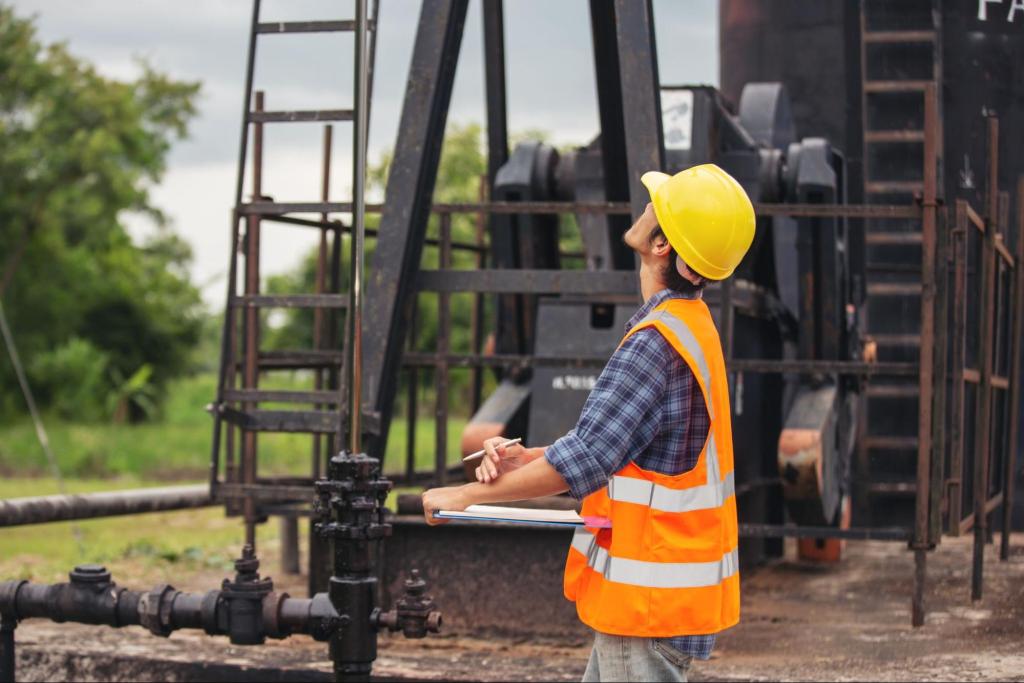
Once you understand clay movement under your property, the next step is choosing the right way to stabilize the foundation.
Now, there are various methods to fix it. But the best solution for your foundation will depend on how active the clay is, how deep it goes, and whether you’re building new or repairing an existing home.
Let’s have a look at stabilization methods for clay soil foundation and when each one makes sense.
1. Moisture control around the foundation
This is the simplest step, and often the most useful.
You seem since clay expands when wet and shrinks when dry, keeping moisture levels consistent around your home alone makes a huge difference.
Moisture control usually includes:
- Building properly sized gutters and downspouts
- Extending downspouts away from the home
- Grading the soil so water flows away from the foundation
- Installing perimeter or curtain drains if needed
- Fixing plumbing leaks
- Managing irrigation systems
In fact, in many homes, improving drainage alone significantly slows or even stops further soil movement.
2. Clay improvement with chemical stabilization
In some cases, engineers improve the clay itself. They might use chemicals like lime for clay stabilization.
This is common in new construction or large repair projects. Here, materials like lime or cement are mixed into the clay to change its behavior.
Think of it as strengthening and calming the soil.
This process does the following:
- Reduces how much the clay expands and shrinks
- Increases soil strength
- Makes the ground more stable under load
3. Removing and replacing problematic clay
Sometimes the most direct solution is simply removing the worst type of clay soil.
Here’s how it works:
If the upper layer of clay is highly expansive, engineers might excavate it and replace it with engineered fill or compacted granular soil. This reduces how much active clay sits directly under the structure.
This method is often used:
- Under slabs
- Around footings
- During site preparation for new homes
It can be very effective because you’re physically removing the problem. However, if the clay layer is deep, full removal might not be practical or cost-effective.
4. Using deep foundation systems to bypass the clay
When clay layers are thick or movement is already severe, deep foundations in construction are often the most reliable long-term fix.
Here, systems like helical piers, push piers, or drilled piers transfer the weight of the home past the unstable clay and into deeper, more stable soil.
So, instead of fighting the clay, you bypass it.
This approach is common for:
- Foundation repairs
- Home additions
- Heavier structures
In fact, in many Carolina repair projects, deep piers provide the strongest and most predictable results, especially when surface solutions aren’t enough.
5. Stronger slab and footing design
For new construction, engineers often design foundations that can better tolerate soil movement.
This might include:
- Thicker concrete slabs
- Extra steel reinforcement
- Improved joint placement
The goal here isn’t to stop clay from moving, because that’s impossible. Instead, engineers try to allow small, controlled movement without major cracking or structural damage.
6. Post-tension slab systems
Post-tension slab systems are sometimes used in areas with highly expansive clay.
These slabs contain high-strength steel cables that are tensioned after the concrete cures. The tension helps hold the slab together, reducing cracking and improving performance when the soil shifts.
Think of it as giving the slab extra internal strength to handle movement.
Post-tension systems are specifically designed for active soils. And they can perform extremely well on challenging clay sites when properly engineered and installed.
In short, here’s how you can stabilize a foundation on clay soil:
| Method | How It Helps |
| Control Moisture | Keeps water away to stop clay from swelling/shrinking |
| Chemical Stabilization | Strengthens clay to reduce movement |
| Remove & Replace Clay | Gets rid of problem soil and replaces with stable fill |
| Deep Foundations | Moves weight past clay to stable soil below |
| Stronger Slabs & Footings | Lets foundation handle small movements without cracking |
| Post-Tension Slabs | Steel cables hold slab together and reduce cracking |
Engineers often use a combination of these methods, here’s why
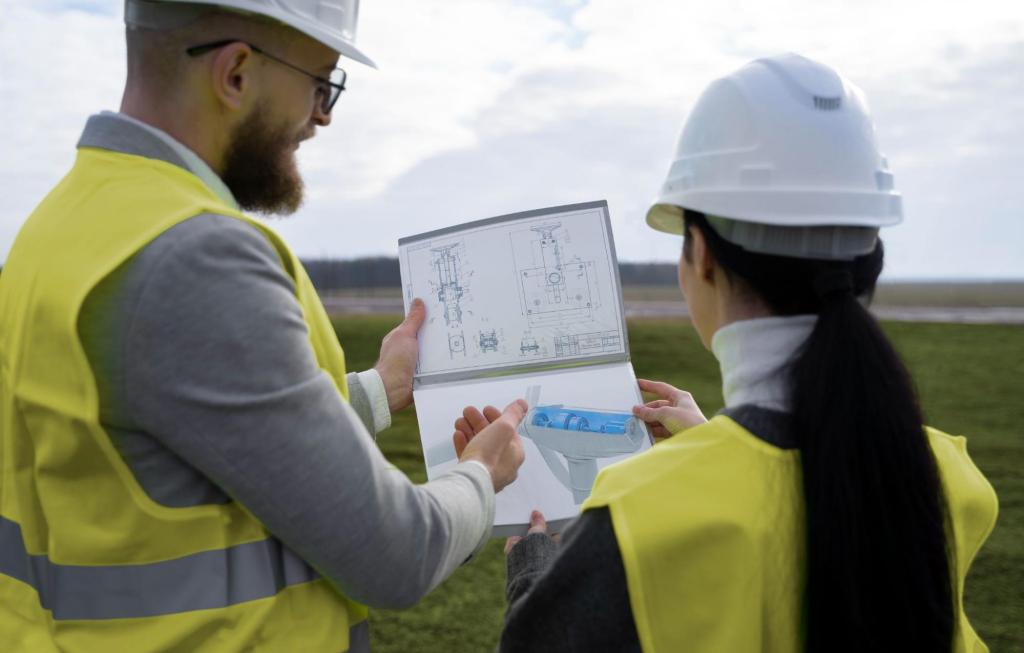
Foundation problems on clay soil usually don’t come from just one issue. So they rarely get solved with just one solution.
For instance, installing deep piers without fixing drainage means the clay will still expand and shrink around the home.
Similarly, if you replace the soil but ignore surface water, it will alow the same moisture problem to continue.
Also, strengthening a slab without controlling water is only solving half the problem.
So, the best long-term results come from layering solutions together.
That often includes:
- Improving drainage and moisture control
- Adding structural support where needed
- Strengthening or improving the soil
Note: The real goal is not to stop clay from expanding
Yes, that’s right.
The goal is not to stop clay from expanding and shrinking. That’s simply not possible as clay will always react to moisture changes.
The real goal is much more practical: Reduce how much that movement affects your foundation.
Engineers do that in three main ways:
- First, they control moisture so the soil isn’t constantly swelling and shrinking.
- Second, they bypass the clay by transferring the home’s weight to deeper, more stable soil.
- Third, they improve the clay itself so it becomes stronger and less reactive.
4 Common mistakes people make while stabilizing foundation on clay soil

When it comes to foundation problems on clay soil, there are a few common mistakes that both homeowners and builders make.
Let’s have a look at them.
1. Relying only on crack repair
Sealing a crack in drywall or brick might make things look better, but it doesn’t stop the soil from moving.
If the clay underneath is still expanding and shrinking, the cracks will usually come back.
2. Skipping soil testing
Without understanding what’s happening below ground, stabilization plans are often based on assumptions.
And assumptions can lead to the wrong fix, or an incomplete one. So, it is important that you hire a geotechnical consultant before moving ahead with foundation stabilization.
3. Ignoring drainage
Water is the main driver of clay movement. Poor grading, clogged gutters, or short downspouts can quietly keep soil too wet for years.
4. Choosing the cheapest short-term fix
Quick fixes often turn into repeat repairs. In foundation work, doing it right the first time is always the best option.
In short, here are the most common mistakes done during clay soil foundation stabilization:
| Mistake | Why It’s a Problem |
| Only fixing cracks | Treats the symptom, not the cause; cracks often return |
| Skipping soil testing | Assumptions can lead to the wrong or incomplete fix |
| Ignoring drainage | Water keeps clay unstable, causing ongoing movement |
| Choosing cheap quick fixes | Often leads to repeated repairs; more expensive long-term |
Bonus: 5 Signs that your foundation needs stabilization
Sign #1. New or growing wall cracks,
Sign #2. Uneven floors
Sign #3. Doors and windows that stick
Sign #4. Visible foundation slab movement
Sign #5. Separation between walls and ceilings
Don’t Let Site Conditions Delay Your Project
From geotechnical reports to environmental assessments, and more, our ACI-certified experts deliver the data and insights you need to stay on schedule.
Final words
By now, I am sure you know exactly how to stabilize foundation on clay soil for decades of stability and structural safety.
You see, clay soil is common in the Carolinas. But that doesn’t mean your building is going to be unsafe.
It simply means the foundation must be designed and stabilized correctly.
Homes and buildings can perform extremely well on clay soils with the right combination of:
- Geotechnical investigation
- Moisture management
- Soil improvement
- Compatible foundation system
Got more questions or want to get a geotechnical soil inspection done?
You can get in touch with us!
At NewTech Engineering, we are ACI-certified geotechnical constituents with 2+ decades of hands-on experience in the Carolinas. We help property owners and builders understand what their soil is doing, and how to build safely on it.
FAQs about clay soil foundation stabilization
Can clay soil in the Carolinas really be stabilized for a home foundation?
Yes, absolutely.
Clay soil itself can’t be stopped from expanding and shrinking, but your foundation can be stabilized so it is far less affected by that movement.
In the Carolinas, this usually involves combining good drainage, proper site grading, and the right foundation support system.
What is the best foundation stabilization method for clay soil?
There is no single best method for every home.
The right solution depends on how deep the clay is, how active it is, and how much movement has already occurred.
In many Carolina projects, a mix of surface water control and deep foundation piers works very well.
Do I always need piers to stabilize a foundation on clay soil?
No, not always.
Piers are usually needed only when the clay layer is thick or when the foundation has already experienced noticeable settlement or movement.
In many homes, improving drainage, correcting grading, and controlling moisture around the foundation can greatly reduce further movement.
Piers are very effective, but they should be used when the soil and movement conditions actually justify them, not as a first default solution.
How does drainage help stabilize foundations on clay soil?
Drainage is one of the most important parts of foundation stabilization on clay soil.
When water is allowed to collect near the foundation, the clay stays swollen and unstable. So, proper gutters, downspout extensions, surface grading, and sometimes perimeter drains help keep moisture levels more consistent.
Can landscaping and trees really affect my foundation on clay soil?
Yes, they can affect it more than most people realize.
Large trees close to a home can pull a lot of moisture out of clay soil, causing extra shrinkage on one side of the foundation.
Heavy irrigation and flower beds near walls can do the opposite and keep clay too wet.
Over time, these uneven moisture conditions can lead to differential movement and cracking.
Is soil testing really necessary before stabilizing a foundation?
Yes.
Soil testing tells engineers how deep the clay layer is, how expansive it is, and where stronger soil exists below. Without this information, any stabilization plan is mostly guesswork.
Can a foundation on clay soil be stabilized permanently?
In most cases, yes.
Here, the goal is not to eliminate clay movement, but to make sure the foundation is no longer strongly affected by it.
Deep foundation systems, improved drainage, and better slab or footing design can greatly reduce future movement.
When these methods are combined correctly, homeowners in North and South Carolina often see very long-term and reliable results.
Should I stabilize my foundation even if the cracks are small?
Small cracks do not always mean you need major stabilization right away.
However, on clay soil, cracks can be early warning signs of movement.
It is a good idea to have a professional evaluation before the problem grows. An engineer can determine whether simple moisture and drainage improvements are enough or if structural support may be needed later.
Kerry Cooper is the founder of New Tech Engineering, He brings over 20 years of hands-on experience in geotechnical investigation, soil analysis, and foundation design across residential, commercial, and infrastructure projects. Kerry leads a team focused on delivering data-driven insights that help builders and developers make smarter, safer decisions from the ground up.