


What Causes Soil Compaction? 8 Reasons You Should Know About

By Kerry Cooper
Founder & Lead Geotechnical Engineer

Soil condition plays a big role when you’re working on a construction project, landscaping around a building, or even maintaining your property.
And among all things, one issue that often goes unnoticed here is soil compaction. In fact, most people tend to ignore compaction until it becomes a problem.
Now, if you’re in North or South Carolina, compaction is something you’re more likely to deal with due to the region’s mix of clay-heavy soils, rainfall patterns, and ongoing development.
But why does it matter so much?
Well, compacted soil can affect drainage, weaken foundations, damage landscaping, and even lead to long-term structural issues if not addressed.
This is exactly why contractors always recommend you get a soil compaction test before starting any new construction.
In this blog, we’ll take a closer look at what causes soil compaction and what you should do if you suspect your soil is compacted.
So, let’s get started.
Key takeaways
- Soil compaction happens when soil particles are pressed tightly together, reducing air and water space.
- Heavy machinery and construction activity are the most common causes.
- Wet soil conditions significantly increase the risk of compaction.
- Foot traffic, vehicles, and livestock can also compact soil over time.
- Clay-heavy soils in the Carolinas are more prone to compaction.
- Preventing compaction is easier than fixing it after it occurs.
What is soil compaction?
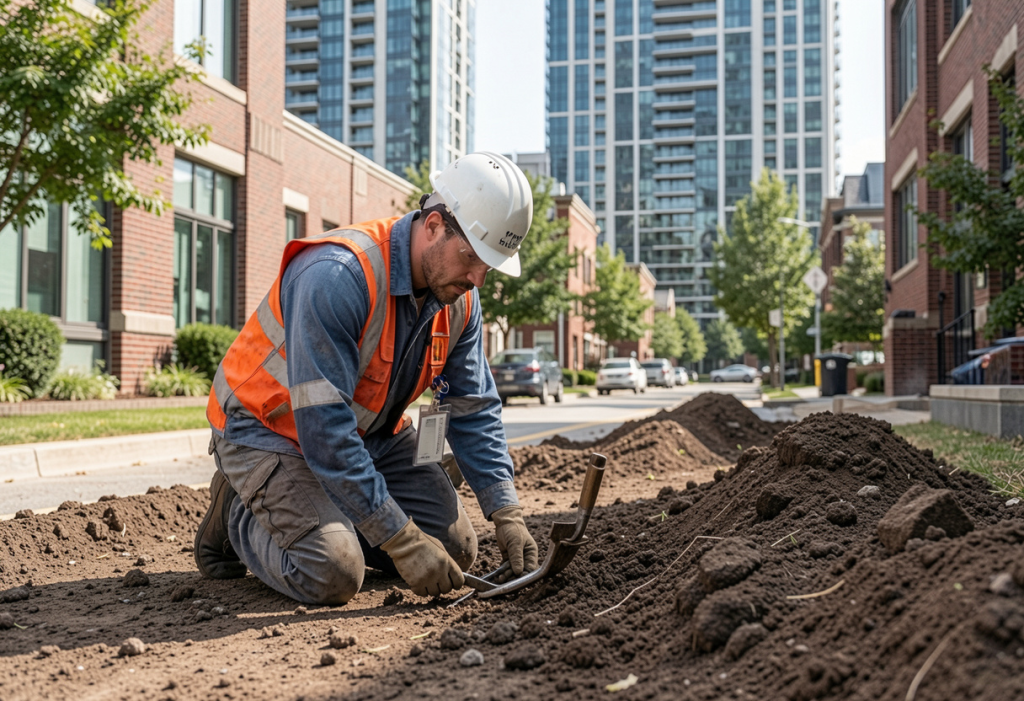
For starters, soil compaction happens when soil particles are pressed closer together, reducing the space between them. This decreases the amount of air and water that can move through the soil.
You see, a compacted soil is dense, hard, and less able to support healthy drainage or root growth.
And this can become a serious problem in both residential and commercial structures, especially during construction or landscaping.
Don’t Let Site Conditions Delay Your Project
From geotechnical reports to environmental assessments, and more, our ACI-certified experts deliver the data and insights you need to stay on schedule.

What causes soil compaction in the Carolinas?

I am often asked by contractors, what are the causes of soil compaction?
And I am sure you’re curious about it too.
The short answer is, there isn’t just one but various reasons for soil compaction.
In most cases, soil compaction happens due to a combination of natural conditions and human activity.
However, human-related factors tend to be the biggest contributors.
Here are some of the most common causes of soil compaction you should know about:
1. Heavy machinery and construction activity
One of the primary causes of soil compaction is the use of heavy equipment.
Construction vehicles, excavators, and trucks apply significant pressure on the ground. And over time, this pressure forces soil particles closer together, reducing pore space and creating dense layers.
This is especially common in:
- New construction sites
- Residential developments
- Driveways and parking areas
In fact, soil compaction is often unavoidable during construction if proper precautions are not taken.
2. Working on wet soil
Soil moisture plays a major role in how easily soil compacts. That’s because when soil is wet, water acts like a lubricant, allowing particles to slide and compress more easily under pressure.
So, using heavy equipment or even walking repeatedly on wet ground can quickly lead to compaction.
This is particularly true for the Carolinas, where rainfall and humidity levels are relatively high throughout the year.
3. Repeated foot traffic and vehicle movement
You don’t always need heavy machinery to compact soil as even regular foot traffic can lead to compaction over time.
For instance:
- Walking repeatedly over the same area
- Children playing in the yard
- Pets running across the same paths
- Vehicles driving or parking on soil
All of these activities gradually compress soil particles and reduce porosity.
Even something as simple as a frequently used pathway can become compacted if left unmanaged.
4. Excessive or improper tillage
Tillage is often used to loosen soil, but too much of it can actually have the opposite effect.
Why?
Repeated tilling disrupts the natural soil structure and can create a dense layer beneath the surface, often called a ‘plow pan.’
This compacted layer can:
- Restrict root growth
- Block water infiltration
- Reduce soil productivity
So while tillage might seem helpful, improper tillage can lead to long-term soil compaction issues.
5. Livestock and animal pressure
In rural or semi-rural areas of the Carolinas, livestock can also be a contributing factor to soil compaction.
When animals repeatedly walk or graze in the same area, their weight compresses the soil beneath them.
Over time, this creates dense, compacted zones that are difficult to restore.
This is especially noticeable near:
- Feeding areas
- Water sources
- Fencing lines
6. Soil type (especially clay-heavy soil)
Here’s something important you should know.
Not all soils compact the same way.
Clay-heavy soils, which are common in many parts of North and South Carolina, are more prone to compaction. That’s because clay particles are very small and can pack tightly together under pressure.
And once compacted, clay soil becomes:
- Hard and dense
- Poorly drained
- Difficult to break apart
This is one of the reasons why soil compaction is such a common issue in the region.
7. Rainfall impact and surface sealing
Rain itself can also contribute to soil compaction, especially when the soil is bare.
How?
When raindrops hit the ground, they break apart soil aggregates and create a thin crust on the surface. This crust reduces water infiltration and increases surface hardness.
Repeated rainfall can worsen soil compaction over time, particularly in exposed areas without vegetation.
8. Lack of organic matter
Soil that lacks organic matter is more vulnerable to compaction.
You see, organic matter helps bind soil particles in a way that maintains structure and creates space for air and water. And without it, soil becomes more prone to collapsing under pressure.
This is often seen in:
- Overworked land
- Poorly maintained lawns
- Areas with little vegetation
TL;DR, here are the common causes of soil compaction in the Carolinas:
| Cause | Description |
| Heavy Machinery | Compresses soil under high pressure |
| Wet Soil Conditions | Makes soil easier to compact |
| Foot & Vehicle Traffic | Repeated pressure reduces pore space |
| Excessive Tillage | Creates dense layers below surface |
| Livestock Pressure | Hoof traffic compacts soil over time |
| Clay Soil Type | More prone to tight packing |
| Rainfall Impact | Creates surface crust and sealing |
| Low Organic Matter | Weakens soil structure |
Why is soil compaction a problem?
Now that you understand what causes soil compaction, the next question you might have is: Why does it matter?
Well, compacted soil can lead to several issues, including:
- Poor drainage and water pooling
- Reduced root growth for plants
- Increased surface runoff
- Weak soil support for structures
- Difficulty in landscaping or excavation
Over time, these problems can affect both the appearance and stability of your property.
What to do if you suspect soil compaction?
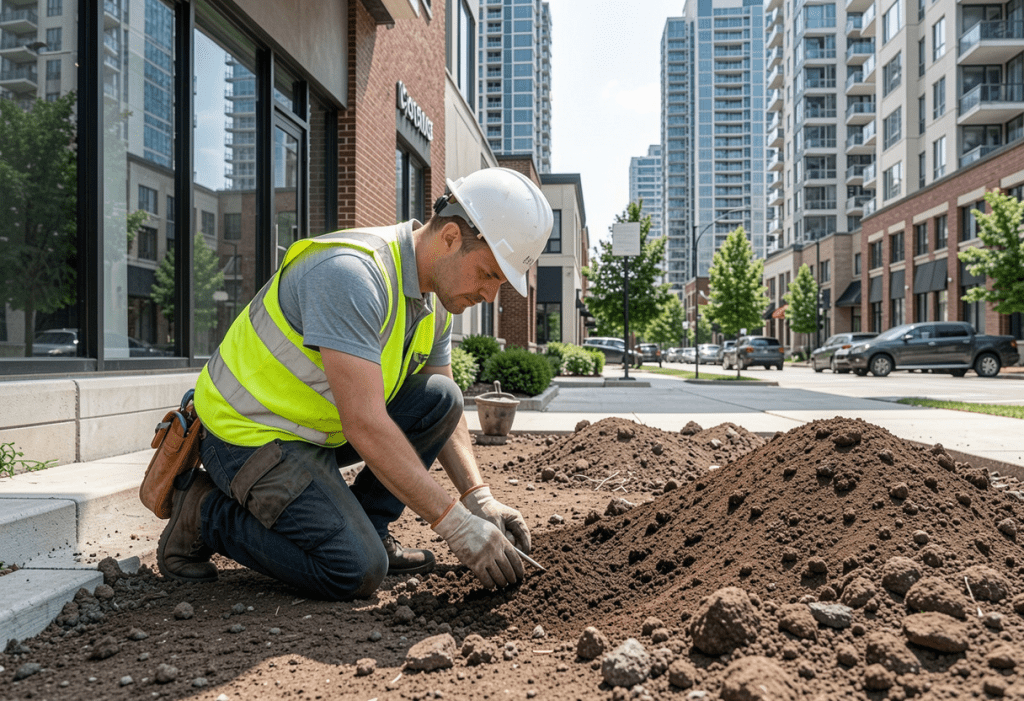
If you think your soil may be compacted, it’s important to handle the situation carefully from the start.
You see, compacted soil doesn’t usually fix itself, and taking the wrong steps can sometimes make it worse instead of better.
Your goal here is simple: Avoid further damage and gradually improve the soil condition in a safe and controlled way.
Here’s what you should do:
1. Avoid adding more pressure
The first step is to reduce any additional stress on the soil.
Try to limit activities like walking, driving, or placing heavy equipment over the affected area. Even small, repeated pressure can worsen compaction over time.
If possible, redirect footpaths or restrict access temporarily. This gives the soil some time to stabilize without further compression.
2. Do not attempt aggressive DIY fixes
It might seem like digging or tilling the soil will loosen it, but this can actually backfire.
That’s because without proper understanding, you could disturb the soil structure and create even denser layers below the surface.
Aggressive DIY fixes often solve the problem only temporarily, while making long-term conditions worse. So, it’s always better to take a controlled and informed approach.
3. Improve soil structure gradually
Instead of trying to fix everything at once, focus on gradual improvement.
Adding organic matter like compost or mulch can help loosen the soil naturally over time.
This improves airflow, water movement, and overall soil health.
But before you do so, get a laboratory soil testing done to maintain consistency and get long-lasting results.
4. Avoid disturbing moist soil
Soil moisture plays a big role in compaction.
So, I suggest you avoid working on or disturbing the soil when it is wet, as this is when it is most vulnerable to compression.
5. Get professional help if needed
If the compaction is severe or affecting construction plans, it’s best to bring in professionals.
They have the tools and expertise to assess soil conditions accurately and recommend the right solution.
This includes testing, mechanical loosening, or other corrective measures that are not possible with basic DIY.
TL;DR, here’s what to do if soil is compacted:
| Step | Recommendation |
| Reduce pressure | Avoid traffic and heavy loads |
| Avoid DIY damage | Don’t overdig or till blindly |
| Add organic matter | Improve soil structure gradually |
| Control moisture | Avoid working on wet soil |
| Get expert help | Consult professionals if severe |
Don’t Let Site Conditions Delay Your Project
From geotechnical reports to environmental assessments, and more, our ACI-certified experts deliver the data and insights you need to stay on schedule.
Final words
By now, I am sure you know what are the causes of soil compaction and why it’s such an important issue, especially in the Carolinas.
From heavy construction equipment to simple foot traffic, there are many factors that cause soil compaction.
And while some level of compaction is unavoidable, ignoring it can lead to long-term problems for your property.
Got more questions or want to get geotechnical soil testing at your construction site?
You can get in touch with us!
At NewTech Engineering, we are ACI-certified geotechnical engineers with 2+ decades of expertise in the Carolinas. And we’ve got all your soil testing needs covered.
FAQs about soil compaction
What are the main causes of soil compaction?
The main causes include heavy machinery, wet soil conditions, foot traffic, excessive tillage, livestock pressure, and clay-heavy soil types.
What causes compacted soil in residential areas?
In residential settings, soil compaction is usually caused by construction activity, vehicles, repeated foot traffic, and poor soil management.
Is soil compaction common in the Carolinas?
Yes, soil compaction is a common issue in both North and South Carolina due to clay-rich soils and frequent rainfall.
Can compacted soil be fixed?
Yes, and there are several proven methods engineers use to fix compacted soil depending on the severity of the problem and overall soil condition.
However, it can still be difficult in severe cases. Improving soil structure with organic matter and reducing pressure can help, but only gradually.
Does rain cause soil compaction?
Yes, especially on bare soil.
Rain can create surface crusting and contribute to compaction over time.
Kerry Cooper is the founder of New Tech Engineering, He brings over 20 years of hands-on experience in geotechnical investigation, soil analysis, and foundation design across residential, commercial, and infrastructure projects. Kerry leads a team focused on delivering data-driven insights that help builders and developers make smarter, safer decisions from the ground up.


